How AI can strengthen the risk picture behind a transaction


Handelsbanken and Projective Group on connected data and human judgement
A business customer gets a new owner. Soon afterwards, unusual payments are made abroad. A sanctions screening alert is also raised. Each of these events could prompt an investigation. But what do they mean together? It is precisely in those connections that information may lie which is central to assessing the customer.
This hypothetical example from a conversation between Handelsbanken and Projective Group at the Amsterdam FinTech Event on 7 October 2026 illustrates where AI can add value. Investigators need context to assess an alert. Large language models, or LLMs, can help make that context more accessible. Their main contribution lies in organising information, supporting investigations and preparing reports.
An alert is the start of an investigation
Rules and machine learning models help detect and score transactions. An alert then needs to be assessed: is the behaviour consistent with the customer, is there an explanation for the deviation, and are there other signals that warrant attention?
Some of the information needed for that assessment is held in unstructured sources, such as customer profiles, KYC files, previous investigation notes and news reports. An investigator has to gather and read this information, then connect it to the alert. LLMs can help with that. Using the sources made available to them, they can summarise relevant passages and present the context around an alert clearly.
This can give an investigator a well-supported overview of the scenarios that were triggered, deviations from the customer’s expected behaviour and relationships between parties recorded previously. It should remain clear which information comes from a source or detection system, and which explanation the language model adds. Bringing data together still depends on functioning integrations and reliable source data.
An alert flags a deviation. Context helps determine what it means
Identifying which alerts need attention sooner
An overview of relevant context can help with alert triage: deciding which alerts need further investigation and what information is still missing. In the business customer example, the language model could present the change in ownership alongside the transaction signals and available background information. This gives the investigator a better starting point for follow-up questions.
Information that weakens a suspicion also deserves attention. An unusual cross-border payment, for example, could be linked to an international acquisition. Conversely, information about a high-risk network could be a reason to continue an investigation. A useful rationale makes both sides visible and points to the data on which they are based.
This can help investigators work more quickly and consistently, and identify false positives more effectively. The bank would still need to demonstrate an actual reduction in false positives. A convincingly worded summary does not, by itself, prove that an assessment is correct or that relevant risks have been adequately identified.
Building the case file also takes time
Alongside gathering information, documenting findings takes considerable effort. Based on validated case data, LLMs can draft an investigation report or suspicious activity report narrative. This might include a timeline of events, the relevant transactions and the considerations that informed the assessment.
The potential benefit is less repetitive writing and more consistent case files. For this to work, investigators need to be able to trace the text back to the sources used. References to sources and an auditable record of the data, processing and assessments involved make it possible to review the work. The text should also clearly distinguish between established facts, suspicions and missing information.
Human judgement needs to be properly tested
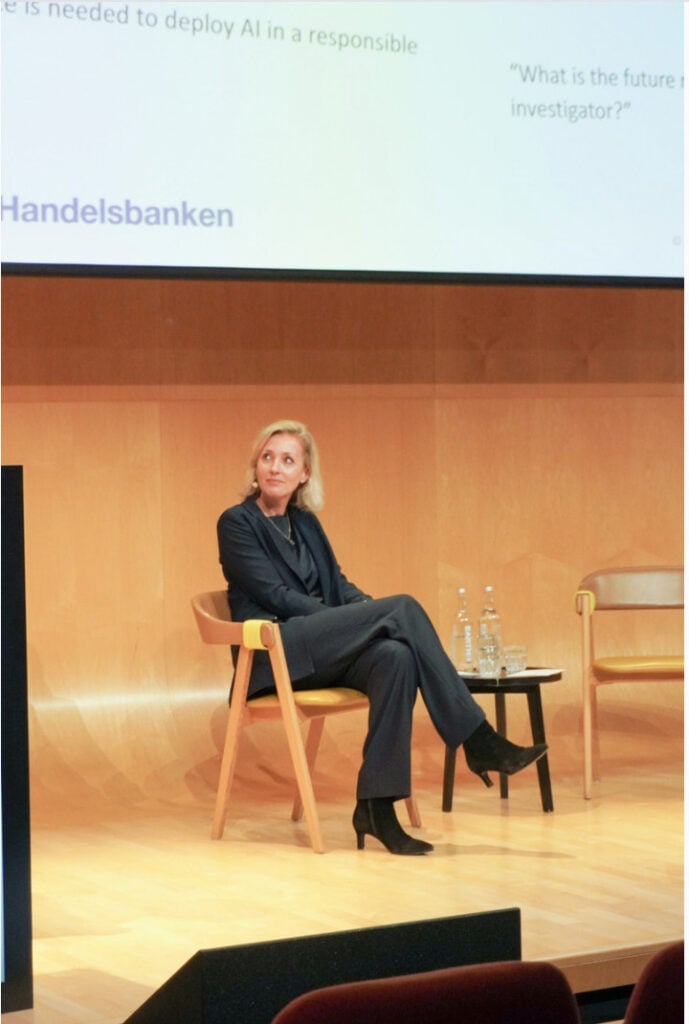
During the session, Suzanne Bos, Head of FEC & Legal and Branch Manager at Handelsbanken, emphasised the interplay between technology and professional judgement. An investigator must be able to question a suggestion and be willing to revise their own assessment when new information warrants it.
This scrutiny is essential when using LLMs. A language model can make factual errors or suggest a connection that is not supported by the sources. Source references make it possible to check the output, but they do not remove these limitations or fully explain how the model arrived at its answer. Employees therefore need the information, knowledge and time to assess the output.
A well-written rationale is not necessarily a correct assessment
In this supporting role, the LLM does not independently decide whether to close an alert or submit a report. The responsible employee reviews the proposed rationale. Clear agreements on permitted use, model validation and monitoring should support this way of working.
Start with the information the investigation needs
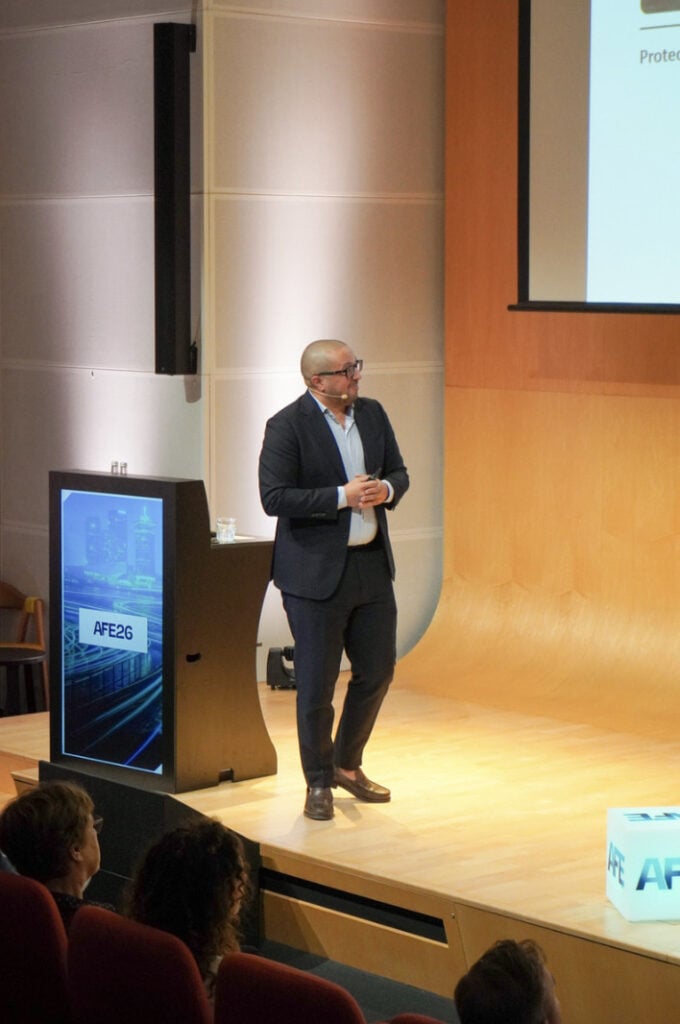
Hamid El Bouazzaouyi, Data & AI Practice Lead at Projective Group, advises assessing the data foundation in relation to a clearly defined use case. What data is needed? How usable is it? And who is responsible for its quality? This makes it clearer what support is feasible and where improvements are needed first.
For example, a bank could start by summarising validated case information. It could then assess whether the output is complete and factually accurate, how well source references work and how much correction is still required. These findings provide a basis for further applications. The number of summaries produced matters less than how useful they are to investigators.
An approach that works for Handelsbanken
For Handelsbanken, technology needs to support long-term customer relationships and careful risk management. Suzanne therefore links the use of AI to the bank’s risk appetite and its ability to explain decisions. Supporting investigators and reducing unnecessary alerts were specific aims of the approach discussed.
Projective Group supported Handelsbanken in defining requirements and assessing potential solutions. This brought together needs from different parts of the organisation with market knowledge, regulatory expertise and implementation experience. Hamid also highlighted the importance of integration with the platform, the required data flows and security.
The LLM applications described illustrate possibilities for the sector; each bank needs to assess which applications are appropriate for its own circumstances. This includes clear responsibilities and a workflow in which employees can properly scrutinise the information presented to them.
The value of AI is reflected in the quality of the investigations it supports.
Returning to the customer with a new owner and unusual payments abroad: bringing these signals together does not, by itself, reveal what is happening. It does help the investigator ask the right questions. If LLMs reduce the time spent searching and writing, investigators have more room to make that substantive assessment. That is where the improvement should become visible: in better-supported case files and decisions for which the bank can remain accountable.