The ESG Regulatory Puzzle: An Overview of How the Rules Fit Together for Financial Institutions (DUPLICATE)

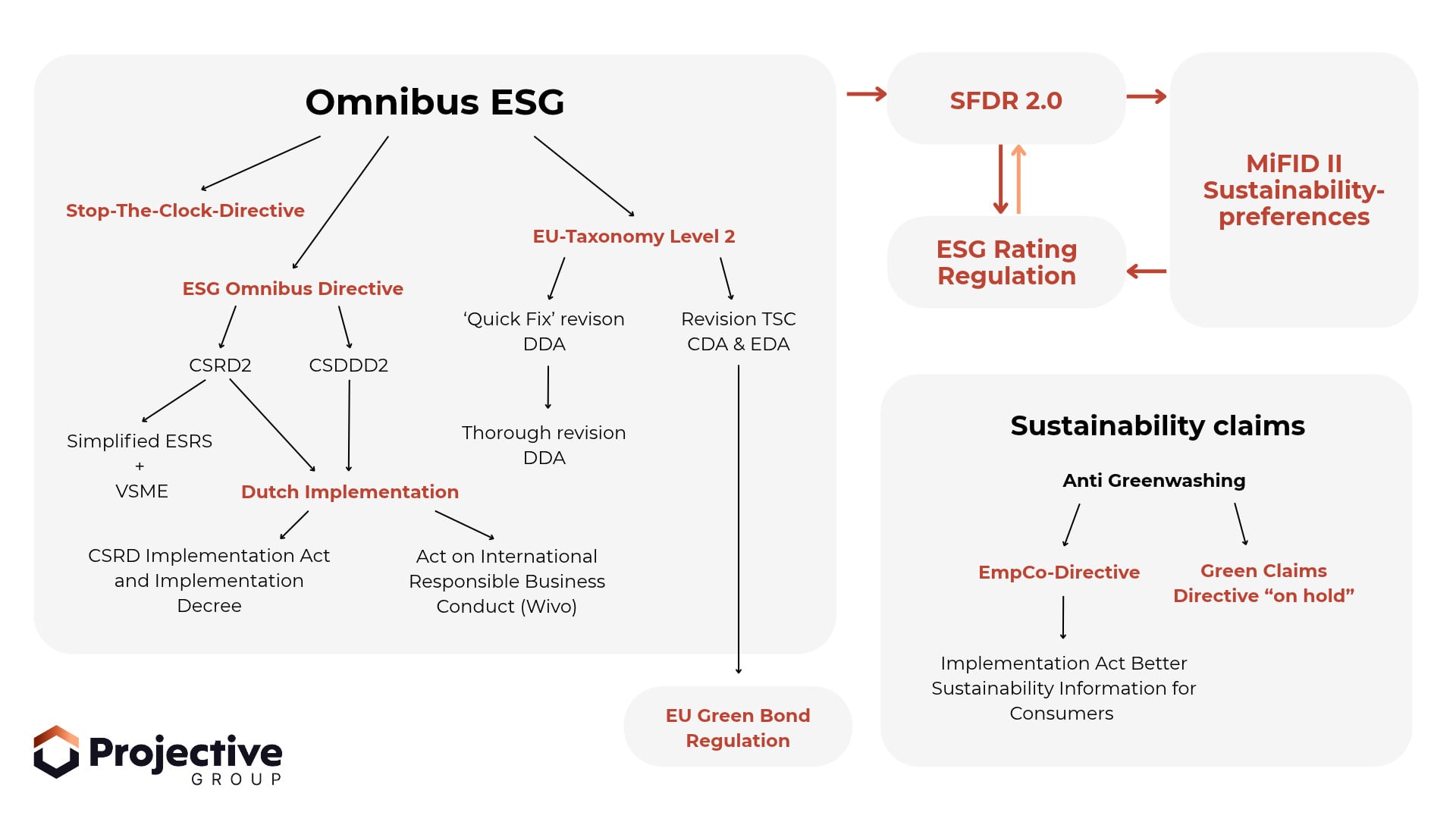
Anyone who follows the European ESG agenda only through newspaper headlines may get the impression that the rules are being rapidly scaled back. That picture is only partly accurate. In just a few years, the European ESG agenda has grown into a complex landscape of regulations, directives and technical standards. Anyone following these separately can quickly lose sight of the bigger picture. Yet the CSRD, CSDDD, Taxonomy Regulation, SFDR, MiFID II sustainability preferences, European Green Bond Regulation and ESG Ratings Regulation do not stand alone. As parts of a single European sustainability framework, they are intended to provide reliable information, support better-informed investment decisions and channel capital towards sustainable economic activities. They share one common goal: to make Europe the world’s first climate-neutral continent by 2050.
The European legislature is revising this framework, but the shift is not simply from more rules to fewer. The scope of sustainability reporting and due diligence has been significantly reduced, while requirements for financial products, sustainability ratings, client advice and environmental claims are becoming more specific. As a result, the connections between the different parts can sometimes be lost. For example, companies’ sustainability reporting provides an important basis for ESG investment strategies and ratings, sustainable financing decisions and the substantiation of sustainability communications. Some obligations are therefore being simplified or postponed, while others are being developed in greater detail. What is changing, what remains in place and how do the rules relate to one another? In this paper, we set out the key developments and explain how they fit together.