The pension transition is not the finish line
The next challenge under the Dutch Future of Pensions Act is making the new pension system work in practice
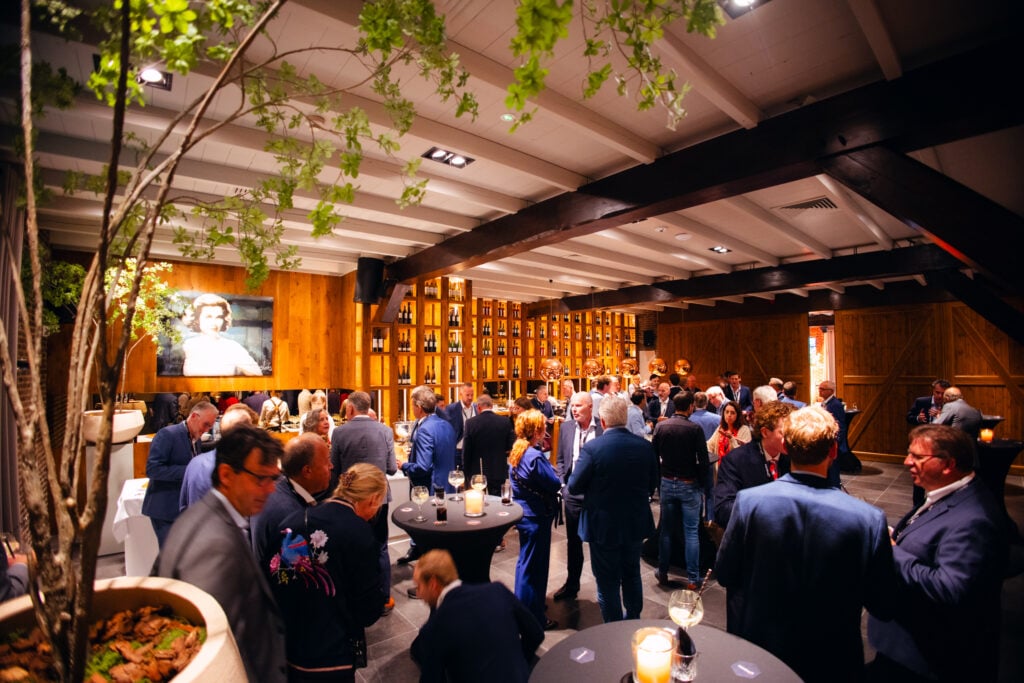
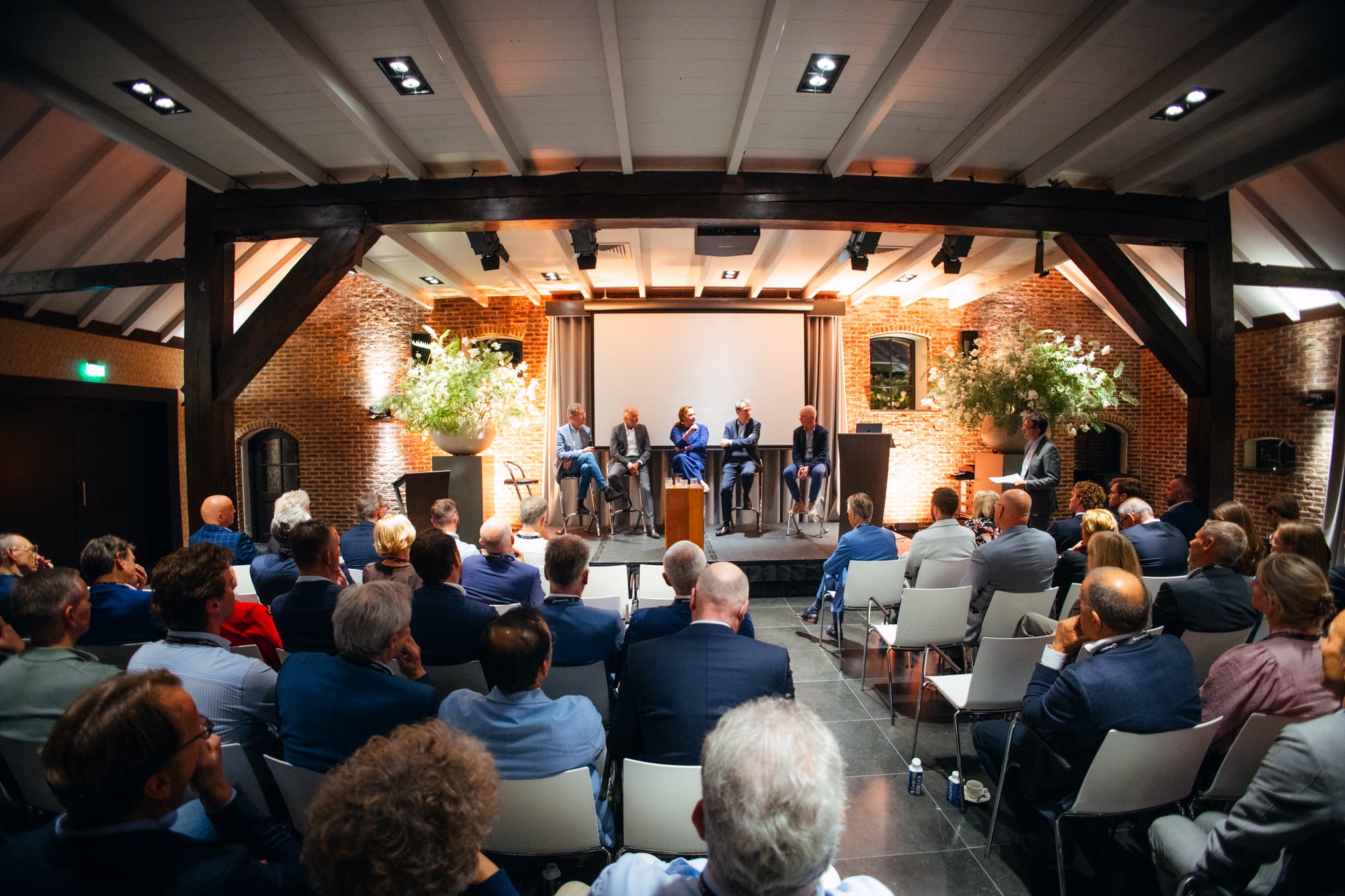
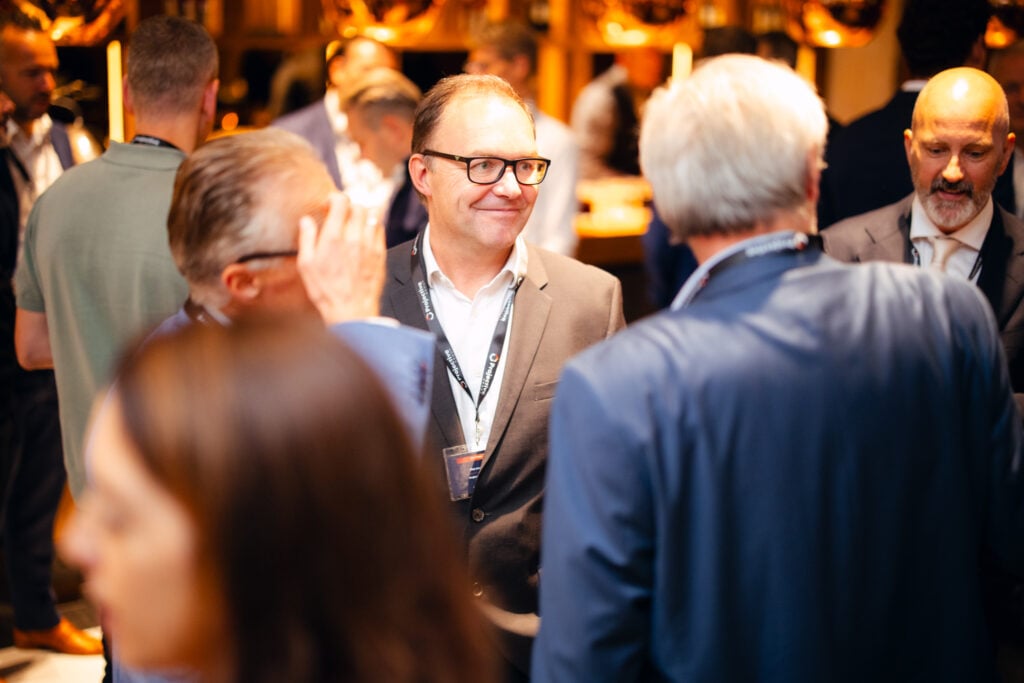
At the third Dutch edition of Projective Group’s Fin & Tonic, Frits Bart from TKP, Sebastiaan van den Dries from AZL, Wim Koeleman from APG, Terry Troost from PMT and José Schenkel from Pensioenfonds Rail & OV shared their experiences of the transition under the Dutch Future of Pensions Act (WTP) and their expectations for what comes next. In front of an audience of around 75 pension specialists, they had an open discussion about the final stages of the transition and the challenges the sector will face afterwards.
Their contributions made clear that transferring accrued pension entitlements into the new system is an important milestone, but not the end of the transition. The new system will have to prove itself in day-to-day practice, which has already begun for much of the sector. New systems, products and ways of working must function for members, employers, employees and pension fund boards. That is when the results of earlier decisions become visible.
The main challenge after the WTP transition is therefore not to launch another transition programme. Pension funds and administrators need to decide how to make the new system manageable, workable and understandable. This already requires decisions about operations, member services, management information, standardisation and technology.
Operations need time to settle after the transfer
The sector is still working towards the remaining transfers. Administrators have developed plans, trained employees and put arrangements in place to monitor progress and incidents closely. These include control rooms and regular daily briefings. Lessons from the first transfers have been used directly to prepare for subsequent, larger ones.
At the same time, it became clear that the transfer itself should not be seen as the finish line. While one pension fund reaches a major milestone, its administrator is often already preparing for the next transition. This succession of transfers places considerable demands on employees. A controlled approach therefore also requires realistic capacity planning, clear priorities and enough time for recovery and knowledge transfer. This helps employees remain effective over the longer term and keeps essential experience within the organisation.
The experiences of pension funds that have already completed the transfer show what comes next. Employees in pension administration and customer service must work with a new system and a different product. A question about how interest rates, equity markets or new scenario sets affect an individual’s pension capital cannot always be answered immediately. It may require input from actuaries and asset managers. Reporting, annual accounts and cooperation between pension administration and asset management also need to settle into a new rhythm.
The period after the transfer therefore deserves as much attention from boards as the migration itself. Administrators and employees need room to adjust to the new reality. Not every process will immediately be as mature as it was before the transition. This calls for clear priorities, targeted improvements and realistic expectations from pension funds and administrators.
The post-WTP period cannot therefore be treated as the final phase of the existing programme. It marks the move to a new operating model.
Communication matters when members experience a change
For several administrators, communication during the transition proved to be one of the most labour-intensive tasks. Producing calculations, carrying out plausibility checks and informing members carefully all require substantial capacity. At the same time, one practical example showed that a detailed transition statement containing many figures generated a response rate of around one per cent. The questions that did come in often concerned existing matters, such as divorce, moving home or transferring pension rights, and had little to do with the transition itself.
The experience of a fund that has already completed the transfer offers another perspective. Member satisfaction increased during and after the change. The fund put members at the centre of its approach and actively reached out to explain what would change. Even so, questions arose mainly when the effects became visible. For example, a first higher pension payment, followed by a month that also included a back payment, caused uncertainty about whether a mistake had been made and money would have to be repaid.
Sending legally correct information remains necessary, but it does not prove that members understand the change. Communication becomes meaningful when someone sees an amount change, has to make a decision or experiences a personal event. During the panel discussion, these were described as moments of truth.
This calls for a shift in member communication. The focus should be on support at relevant moments, rather than the number of documents sent. Sometimes digital information is enough. For significant decisions or unexpected outcomes, personal guidance must also be available. This will play an important role in shaping pension services after the WTP transition.
Boards need new management information to see what is happening
Under the old system, the funding ratio provided a familiar, if limited, reference point. The new system does not yet have a comparable measure. Differences between groups of members in administration and individual outcomes make it harder to express a fund’s position in a single figure.
There is also the question of what a new measure should achieve. Is it intended to compare pension funds, or to help members understand what is happening to their pension? A single average outcome may obscure differences between groups of members.
Boards nevertheless need new information. The discussions repeatedly raised questions about the allocation of investment returns, costs, services and how member journeys work in practice. Administrators are developing reports and dashboards, but they still need to agree with pension fund boards what information is required, how often it should be provided and which decisions it should inform.
Analysing individual member journeys can provide useful insights. A comparison with other funds may, for example, show how many employers need additional manual support and how this affects administration costs. This makes it clearer where processes can be improved and where additional service is a deliberate response to members’ needs.
Management information after the WTP transition must therefore go beyond investment returns and total costs. Boards need to see where members encounter difficulties, which processes require additional capacity and which services demonstrably add value.
Standardise what does not make a difference to members
Scale and standardisation were recurring themes in the discussion. Further consolidation of pension funds is expected to have a substantial impact on the market in the coming years. Administrators need to prepare for this while continuing to invest in the needs of pension funds, employers and members.
Standardisation is needed to control costs and operational errors. Complete uniformity, however, is neither realistic nor desirable. Retirement alone involves different circumstances, preferences and choices. Pension funds also differ in their ambitions. One fund may focus on providing good services within the second pillar, while another wants to offer members broader guidance.
The aim, therefore, is not to make every member journey identical. The underlying process can often be standardised. At retirement, for example, this may include providing information on time, recording choices and starting pension payments. The timing, level of guidance and additional services can then vary by fund or group of members.
This approach requires pension funds to make a clearer choice: where does a different approach genuinely add value for members, and where does it mainly create additional complexity? Standardisation should not become an end in itself. It should create room for services that make a meaningful difference.
It also requires more cooperation, and sometimes different forms of cooperation, between pension funds, administrators and suppliers. During the transition, several software providers built their own solutions. Looking ahead, there is an opportunity for the sector to develop shared information and tools to help members make choices. The panel also sounded a note of caution: the willingness to work together is there, but the results too often fall short.

AI starts with processes and responsibilities
The discussion about artificial intelligence went beyond general expectations. Speakers mentioned applications in risk reporting, process analysis, information processing and testing new software releases. They also saw opportunities in member communication, for example by helping employees find information more quickly or supporting record-keeping and analysis behind the scenes. This could leave more time for personal contact.
Not every application requires the same assessment. Using AI for internal documents or system testing is different from using it in processes involving member data. Privacy, client consent and checks on the results play a greater role in those cases. Administrators find that their clients consider innovation important, but ask more detailed questions before approving specific uses.
The WTP transition has created a useful starting point. Organisations have invested considerable time in data quality and in renewing platforms and processes. The next step is to teach employees how to use digital tools responsibly.
The panel described this as a hybrid model. The pension professional remains responsible for the advice and uses AI to find information, support analysis and carry out processes more efficiently. The relevant question is therefore not how much AI an organisation uses, but where it demonstrably helps and who remains responsible for the outcome.
The post-WTP period belongs on board agendas now
Practical experience from across the sector makes clear that the period after the WTP transition cannot be treated as a separate programme of follow-up work. Decisions being made now about operations, member services, management information, standardisation and AI will determine how the new system functions every day.
Pension funds and administrators do not need to share the same ambitions in every respect. They do, however, need to decide together where to standardise, what services to offer members and which knowledge and capacity must be retained over the longer term.
Boards and administrators can assess their preparations against three questions:
- Which knowledge, capacity and controls must be retained as the transition programme is wound down?
- When do members actually experience a change, and what support should be available at those moments?
- Which processes can be standardised, and where does a different approach demonstrably add value?
Pension funds that have already completed the transfer provide valuable practical experience. The rest of the sector can use that experience now: both to manage the next transfer successfully and to ensure the new system remains manageable, workable and understandable afterwards.
The conversation continues after the transfer
Projective Group welcomes further conversations with pension funds, administrators and other organisations about the remaining WTP transition and what follows in practice. Topics range from operating models and cooperation across the pension value chain to member communication, data and AI. Would you like to explore what the next phase means for your organisation? Contact our pension experts.